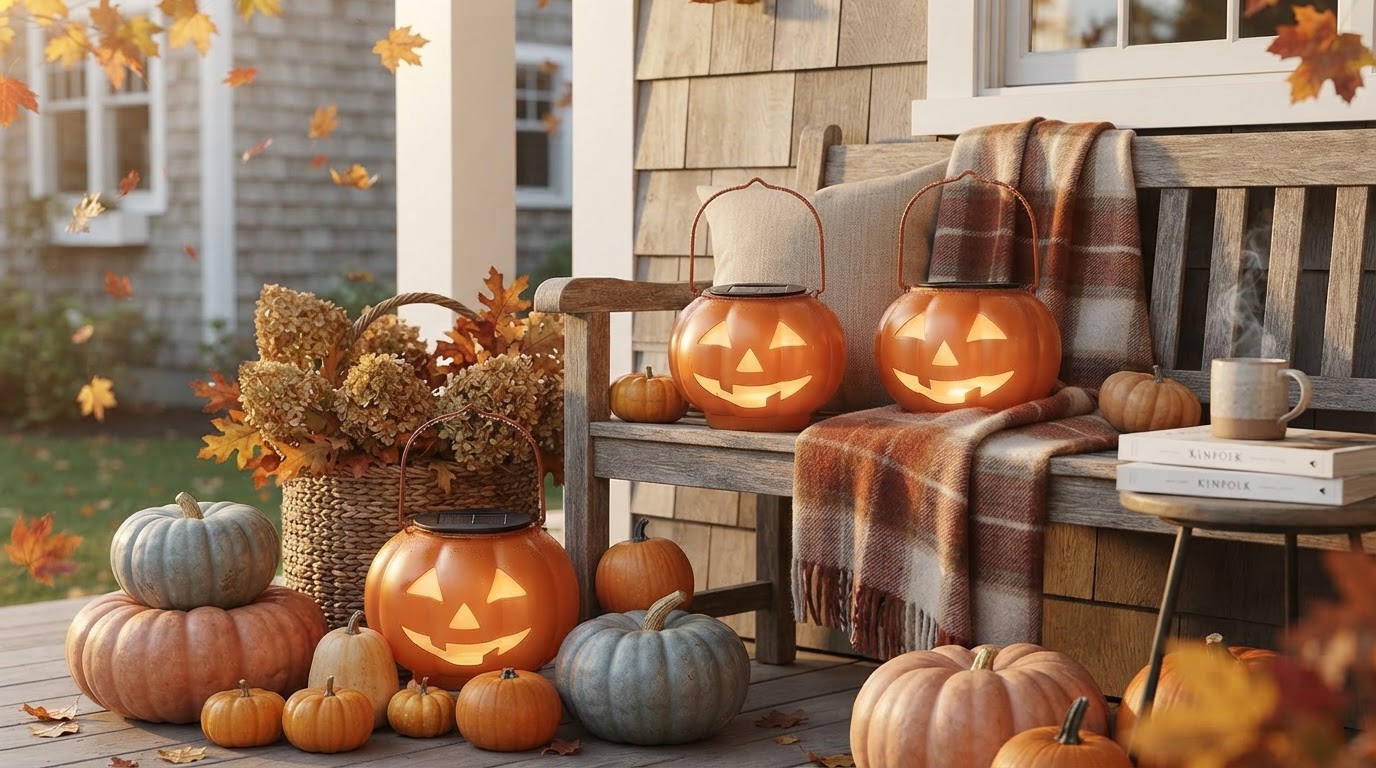
Optimizing Autumn Curb Appeal with Solar Pumpkin Decor Light
 Jordan HaleStaff Writer
September 19, 2026. This review examines the practical application of the Solar Pumpkin Decor Light for residential fall porch displays. It is written for homeowners seeking to balance seasonal aesthetics with energy efficiency.
The air turned crisp last Tuesday, the kind of sharp chill that makes you reach for a heavier flannel and start thinking about the front steps. I stood on my porch with a tangled mess of extension cords, realizing that my vision for a warm, amber-lit entrance was physically tethered to a single, inconvenient outdoor outlet. The weight of heavy plastic pumpkins and the logistics of hiding orange wires across the masonry felt like a chore rather than a celebration of the season. According to a community discussion on Facebook regarding fall porch decorating ideas with solar lights and lanterns, the most successful displays often rely on stacking hay bales and integrating maple leaf string lights to create depth, but the power source remains the primary friction point for most decorators. When you are trying to layer textures—the rough straw, the smooth skin of a gourd, and the delicate flicker of light—cables act as a visual anchor that pulls the eye away from the magic. Transitioning to sustainable halloween porch lighting isn't just about the environment; it is about the freedom to place a light exactly where the composition demands it, rather than where the copper wire allows. I spent hours repositioning my traditional plug-in lanterns, only to find they couldn't reach the far corner of the steps where the shadow was deepest. It becomes a design limitation that dictates your creativity, forcing a symmetrical layout that often feels stiff and manufactured rather than organic and welcoming.
The first thing I noticed was the tactile quality of the Solar Pumpkin Decor Light. It doesn't have that hollow, brittle feel of a standard plastic jack-o'-lantern; there is a sturdiness to the casing that suggests it can handle the unpredictable shifts of late September weather. It turns out that the integration of the solar panel into the design eliminates the need for the external battery packs that often clutter eco friendly halloween yard decor. I placed the units in full sun near my steps, and by dusk, they began to emit a steady, warm glow that mimicked the flicker of a real candle without the fire hazard or the constant maintenance of wax. The technical appeal lies in the autonomy of the system. Because these are solar pumpkin lights, they operate on a simple light-sensing circuit that activates as the sun dips below the horizon. I didn't have to remember to flip a switch or set a mechanical timer that inevitably drifts out of sync. The light quality is specifically tuned to that amber harvest hue, avoiding the harsh blue tint often associated with cheaper LED alternatives. I found that placing them among real mums and dried corn stalks created a seamless blend of natural and synthetic elements. The lack of wiring meant I could finally achieve a light up pumpkins for outside no plug setup that looked professional and uncluttered. Even on overcast days, the internal cells gathered enough ambient light to provide several hours of illumination, which is essential as the days grow shorter and the nights become the primary backdrop for our seasonal displays.
I keep coming back to the simplicity of the transition. When you are deciding how to build out your seasonal lighting, the framework should focus on durability, light temperature, and placement flexibility. You want a piece that functions as a cornerstone of your solar pumpkin lights collection while requiring zero daily intervention. Somewhere around week two, I stopped checking the weather forecast before bed; the waterproof seals on these units are robust enough to handle the driving rain that often precedes the first frost. To ensure your porch setup remains cohesive and functional throughout the season, consider this operational checklist:
- Evaluate the daily sun exposure of your porch to ensure the solar panels receive at least 4-6 hours of direct or bright indirect light.
- Prioritize units with integrated sensors to automate the transition from dusk to dawn without manual switching.
- Mix textures by pairing the smooth finish of the Solar Pumpkin Decor Light with organic materials like hay, wood, or dried foliage.
- Verify the IP (Ingress Protection) rating for any outdoor lighting to ensure it can withstand autumn storms and frost.
- Position your lights at varying heights—using stairs or crates—to create a three-dimensional glow rather than a flat line of light.
Shop Solar Pumpkin Decor Light here