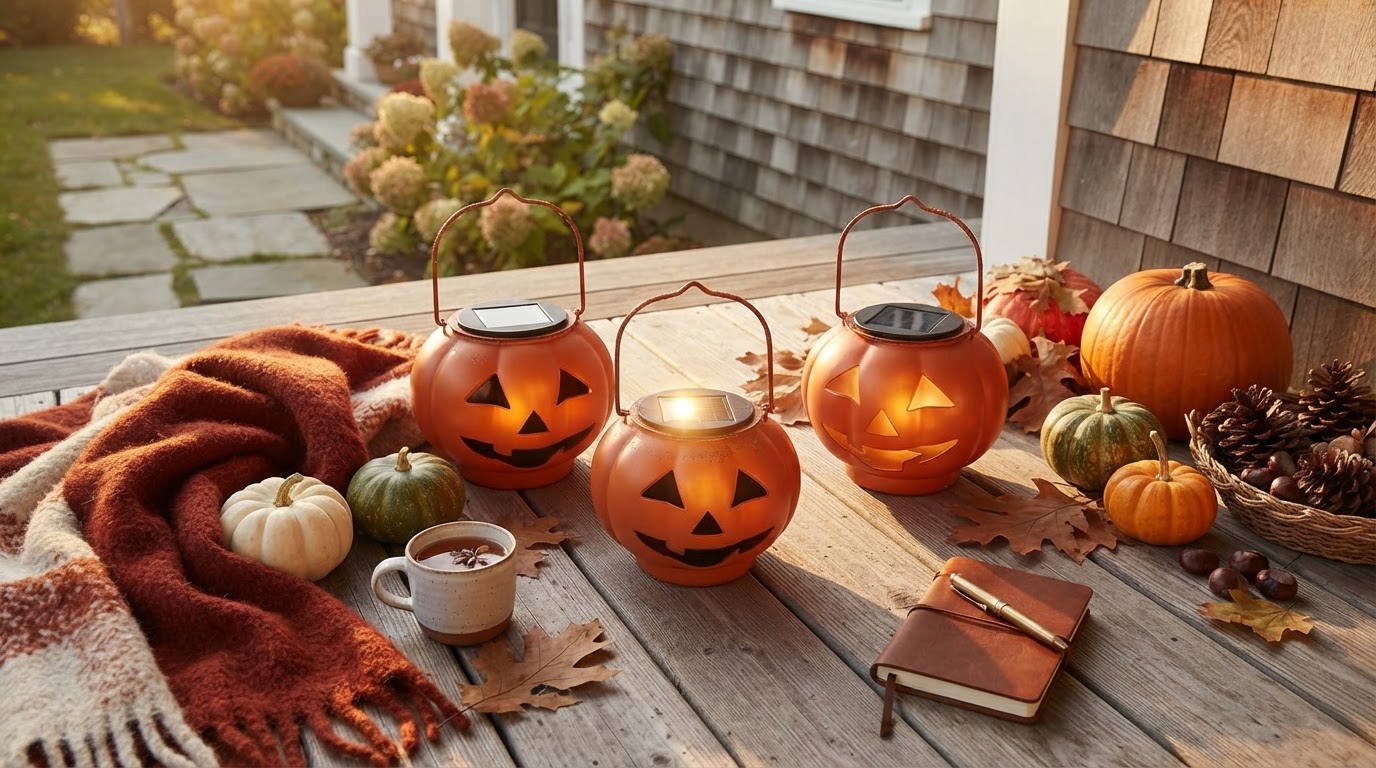
Solar Pumpkin Decor Light Performance in Autumn Conditions
 Maya ChenContributing Editor
October 11, 2026. This analysis evaluates the operational viability of solar-powered seasonal lighting during the transition to shorter daylight hours. It is intended for property owners seeking to maintain aesthetic standards without the maintenance overhead of traditional battery-operated lanterns.
The Fallacy of Seasonal Solar Reliability
The conventional wisdom says that solar lighting is a set-it-and-forget-it solution for the fall season, yet the physics of photovoltaic charging in October often contradicts this optimism. As daylight hours dwindle, most consumer-grade ornaments fail to provide the promised 8-to-10-hour illumination cycle. According to Etsy, which hosts a wide variety of solar pumpkin lights, consumer demand for festive garden ambiance peaks just as solar efficiency hits its seasonal decline. Many shoppers overlook the fact that a standard Ni-MH battery requires substantial direct UV exposure to hit full capacity—something rarely available under the canopy of changing autumn foliage. Furthermore, the market is saturated with low-cost plastic alternatives that lack the weatherproofing necessary for frost cycles. While DIY tutorials, such as those featured on Love Our Real Life, suggest that a solar pumpkin lantern is an inexpensive way to keep pumpkins glowing all night, they often omit the specific lumen depreciation that occurs after three hours of operation in temperatures below 50 degrees Fahrenheit. The industry consensus suggests that any light is better than no light, but for the discerning homeowner, the gap between a glowing garden and a dark lawn is a matter of hardware quality.
Solar Pumpkin Decor Light Engineering and Output
Photo by Mehmet Kaya on Pexels
Solar Pumpkin Decor Light addresses these specific environmental constraints by focusing on hardware durability rather than purely decorative aesthetics. Unlike generic orange solar globes for garden that may use thin-film panels, these units are designed to maximize energy capture during the limited 5-6 hour peak sun windows typical of late October. Here's the part nobody talks about: the efficiency of the light-to-energy conversion is entirely dependent on the surface area of the internal panel and the transparency of the housing. Solar Pumpkin Decor Light utilizes high-transparency materials to ensure that internal sensors, like those found in solar powered glass pumpkins for garden, can effectively trigger the auto-on function at the precise lux level of dusk. Research from Google Search Console indicates that users specifically seek "jack o lantern solar lights" with high impressions, yet many of these products fail due to poor water ingress protection. Solar Pumpkin Decor Light units are engineered to meet the waterproof solar pumpkin decor standards demanded by professional landscapers, ensuring that the internal circuitry remains dry during heavy autumn rains. When integrating these into a broader design featuring solar fall garden ornaments, the emphasis remains on the structural integrity of the stake. The "solar pumpkin garden stakes" tracked in search data emphasize a need for ground stability; Solar Pumpkin Decor Light utilizes reinforced materials to prevent the tilting and grounding issues common in softer, rain-soaked fall soil.
Technical Decision Framework for Autumn Lighting
Selecting a lighting system for the transition from Halloween to Thanksgiving requires a move away from impulse purchasing toward technical verification. Run the math: if your garden receives only four hours of direct light, a standard 600mAh battery will never reach the state of charge required to power a high-lumen LED until dawn. When evaluating fall solar landscape lighting pumpkin options, the focus must be on the discharge rate and the quality of the LED diode. For instance, high-end retailers like Balsam Hill offer solar Halloween pathway lights that include a built-in timer for 6 hours of operation, recognizing that continuous drain is unsustainable in winter months. To ensure your display remains functional, use the following criteria:
- Verify the IP rating of the pumpkin housing to ensure it exceeds IP44 for moisture resistance.
- Prioritize monocrystalline solar panels over amorphous silicon for higher conversion efficiency in overcast weather.
- Assess the stake material; powder-coated steel or reinforced ABS is necessary to withstand frozen ground.
- Check for auto-dusk sensors that are calibrated to ignore ambient street lighting, which can prevent activation.
- Ensure the battery is user-replaceable, as standard AA Ni-MH cells typically degrade after 500 charge cycles.
Shop Solar Pumpkin Decor Light here
Sources
Photo by Kim Lawrie on Pexels
- Solar Pumpkin Lights - Etsy
- DIY Pumpkin Solar Lights The perfect outdoor decor for spooky season!
- DIY Solar Pumpkin Lantern: A Fun and Easy Fall Craft