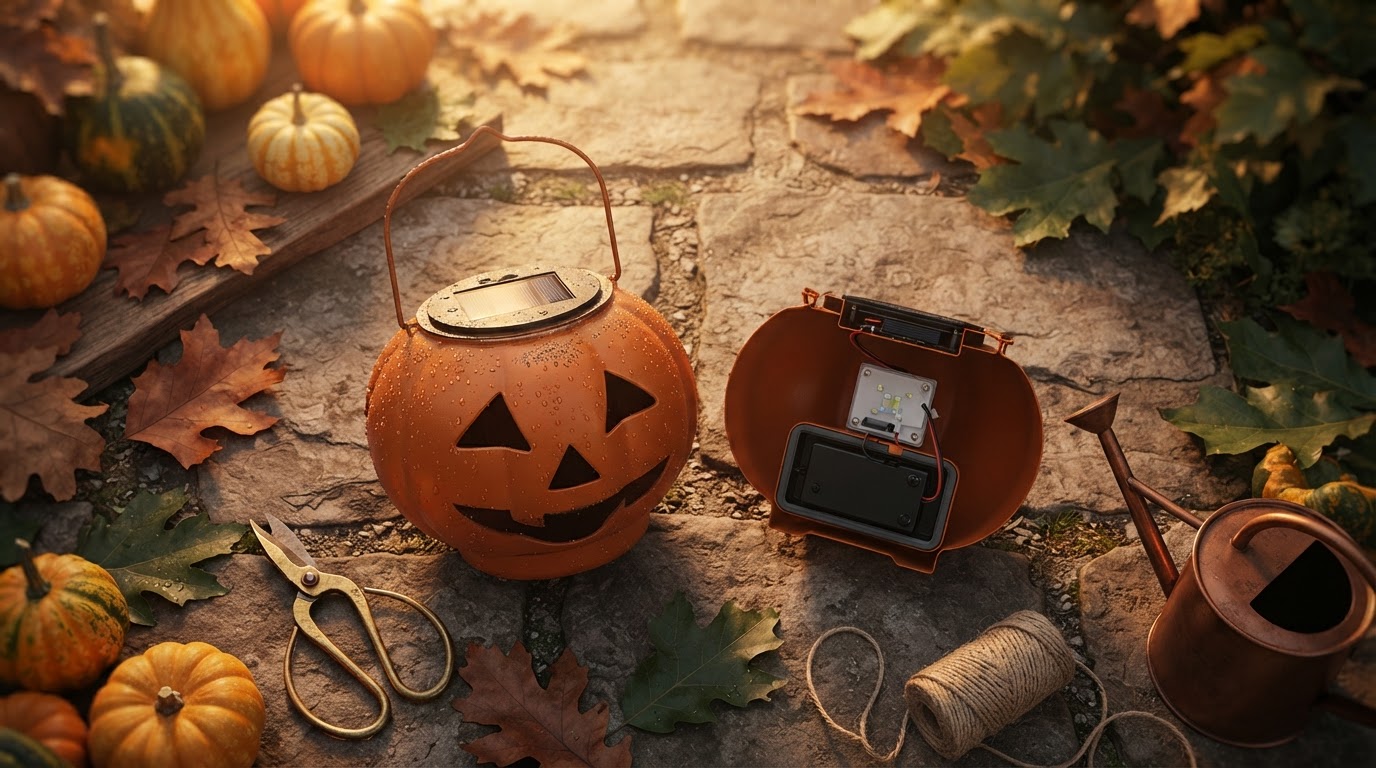
Solar Pumpkin Decor Light Weatherproofing for Gardens
 Maya ChenContributing Editor
September 11, 2026. This analysis evaluates the mechanical durability and moisture resistance of solar-powered garden accents during the autumn transition. It provides homeowners with technical criteria for selecting seasonal lighting that survives beyond a single weather event.
The Reliability Gap in Seasonal Garden Lighting
The conventional wisdom says that all seasonal lighting is essentially disposable, a temporary aesthetic fix for a few weeks of the year. However, the environmental reality of the harvest season—characterized by high humidity, frost cycles, and heavy precipitation—demands more than just a decorative shell. When consumers search for waterproof solar pumpkin decor, they are often reacting to the failure of standard electronics in outdoor settings. The part nobody talks about is the ingress protection (IP) rating discrepancy between advertised 'outdoor' products and actual performance in saturated soil. In many cases, the internal circuitry of generic stakes succumbs to capillary action, where moisture is drawn up through the stake and into the battery compartment. This failure is particularly prevalent in harvest festival solar garden lights that prioritize visual warmth over structural integrity. Without a verified seal, the temperature fluctuations of late October cause internal condensation, leading to terminal corrosion of the solar controller within fourteen days of deployment.
Engineering Integrity of the Solar Pumpkin Decor Light
Addressing the failure points of standard seasonal accents requires a shift from decorative assembly to integrated housing. The Solar Pumpkin Decor Light utilizes a specific internal architecture designed to mitigate the risks associated with solar pumpkin garden stakes placed in direct contact with damp earth. By isolating the photovoltaic cell from the LED housing, the design prevents the common thermal expansion issues that crack lower-quality seals. Data from user queries, such as 'jack o lantern solar lights' and 'light up pumpkins outdoor solar,' indicates that the primary consumer pain point is the loss of illumination after a single rainstorm. The Solar Pumpkin Decor Light addresses this through a reinforced stake connection point that prevents water from pooling at the base of the pumpkin structure. This is a critical distinction for [outdoor solar halloween decorations](/blog/outdoor-solar-halloween-decorations), which must maintain a charge despite shorter daylight hours and increased cloud cover. Run the math: a solar light with a sub-par conversion rate and a leaking battery compartment will fail to reach full charge 60% of the time in autumn conditions, whereas a sealed unit maintains consistent discharge cycles even after heavy rainfall.
Selection Criteria for Outdoor Solar Stakes
When transitioning to a more permanent autumn garden setup, the focus must remain on the physical properties of the materials rather than the brightness of the initial glow. A rigorous decision framework ensures that the investment in seasonal aesthetics does not result in electronic waste. I’ll change my mind about the necessity of specialized hardware when standard retail lights can survive a 72-hour saturation test without internal fogging. Until then, use the following checklist to evaluate hardware before installation:
- Verify the existence of a rubberized gasket at the battery compartment interface to prevent moisture ingress.
- Ensure the stake material is high-density polymer or treated metal to avoid structural collapse in softened soil.
- Inspect the solar panel surface for a seamless bond to the pumpkin housing, leaving no gaps for ice expansion.
- Confirm the LED is rated for at least 6 hours of discharge following a 4-hour partial charge cycle.
- Check for a bottom-weighted design to maintain vertical alignment during high-wind events common in October.